Including People in Architectural Photography
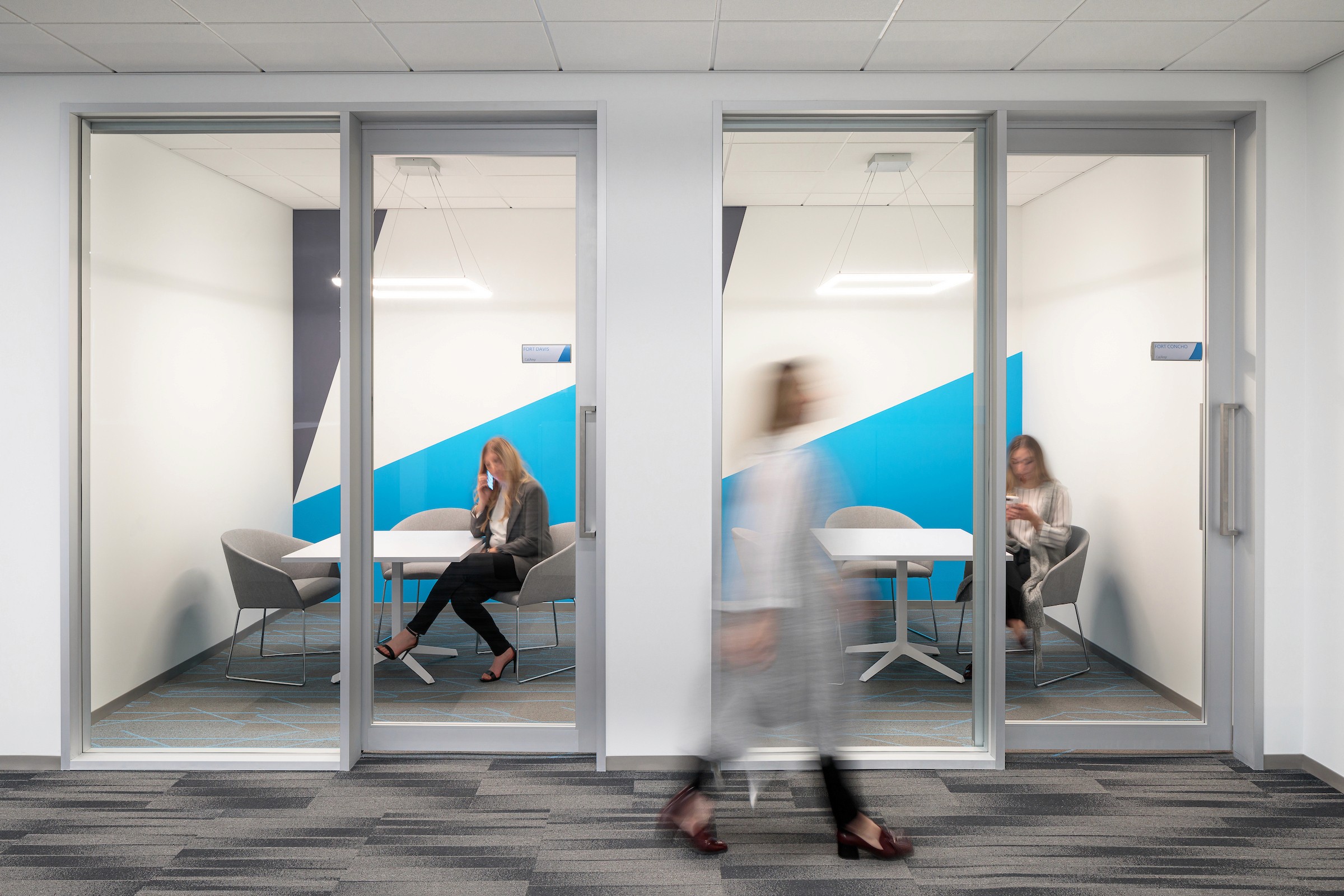
Whether to include people in architectural photography doesn't have a universal answer. The right choice depends on the building, the audience, and what the images need to communicate. What's worth understanding is what figures actually do in an architectural photograph — and where they help, where they complicate things, and how to think about it before the shoot rather than during it.
What people add
Scale. The most functional reason for including figures is spatial communication. A building without any human reference can be hard to read dimensionally. A person in a lobby clarifies ceiling height in a way that no camera angle fully replicates. For buildings where scale is a significant part of the architectural statement — a generous atrium, an expansive threshold, a long corridor with a specific proportion — a well-placed figure tells the viewer what being in that space actually feels like. Without one, the image may read as abstract.
Life and occupation. Empty spaces read as empty, even beautifully finished ones. For buildings designed around human activity — hospitality environments, workplace interiors, mixed-use amenity spaces — photography that presents only the architecture without any suggestion of habitation can feel clinical in ways that don't reflect the design intent. The building was made for people. A figure at a window, a pair of people in a lobby, silhouettes in a courtyard — each shifts the reading of a space from finished artifact to inhabited environment.
Audience specificity. For certain building types and certain marketing contexts, showing the intended user in the intended space creates a direct connection that pure architectural photography doesn't. This matters most for workplace environments and hospitality photography, where the experience of occupying the space is the thing being communicated.
Where figures complicate things
Clothing dates. This is the practical argument against people in architectural photography that most firms eventually discover firsthand. Images from a 2019 shoot with figures in 2019 clothing start to read as 2019 by 2023. The architecture remains current; the photograph doesn't. For images intended to have a long portfolio life — award submissions, firm portfolios, editorial use — figures are a liability because they embed a timestamp the architecture doesn't carry on its own.
Expression and presence are unpredictable. A figure that reads as a purposeful occupant in one frame reads as someone who noticed the photographer in the next. Getting people to read as naturally present rather than performed requires either careful direction or the patience to shoot until you have something genuine. Both take time and add complexity to the shoot day.
Model releases are required. Any person who is identifiably photographed in commercial work — work used for marketing, promotion, or publication — requires a signed model release before those images can be used. This includes employees, clients, design team members, and anyone else visible in frame with recognizable features. This is administrative work that needs to be organized before the shoot, not discovered afterward when a deadline has appeared.
How we approach the decision
For most architectural assignments, the question of figures belongs in the pre-shoot planning conversation rather than an on-the-fly decision made on site.
For buildings where scale communication is a priority — civic spaces, large commercial interiors, significant exterior approaches — we'll plan for a small number of figures in select views. The emphasis is on the views, not the figures themselves; the figure is a compositional tool, not the subject.
For occupied buildings — workplaces, hospitality, mixed-use — the figure strategy is part of overall shot planning, including whether existing staff or professional talent makes more sense, who coordinates scheduling and releases, and how much of the shoot is devoted to lifestyle-oriented views versus architecture-oriented ones.
For pure portfolio work intended for award submissions and editorial use, we typically lean toward the figures-optional approach: capturing the architectural quality of the space clearly, producing versions with and without figures for select views where scale or occupation matters, and giving the client options depending on context.
What we don't do is add people as an afterthought. Either they're part of the plan, or they're not in the frame.
For AIA and design award submissions specifically
Award juries evaluating architectural work are primarily looking at design resolution, material quality, and spatial achievement. Lifestyle elements — people, props, decorative styling — shift attention away from the architecture and toward something else. For AIA, Interior Design Excellence, and similar juried submissions, most photographers and most experienced firms default to images that present the architecture cleanly and let the design carry the submission.
There are exceptions. A building where the relationship between architecture and human activity is the central design idea may warrant figures. A public space that reads as incomplete without evidence of use may need them for honest representation. But these are deliberate decisions, not defaults.
If your project has images with people and images without, the award submission version is almost always the one without.
Planning an upcoming shoot and not sure what approach fits? Let's talk it through.
About the author
Sean Gallagher has photographed architectural projects for AIA submissions, editorial publications, and development marketing across Texas for over 20 years.
Work with us
We work with architecture firms, interior designers, and developers across Dallas–Fort Worth and Texas. Contact us to discuss your project.
Get in touch →