What is Medium Format Digital Photography?
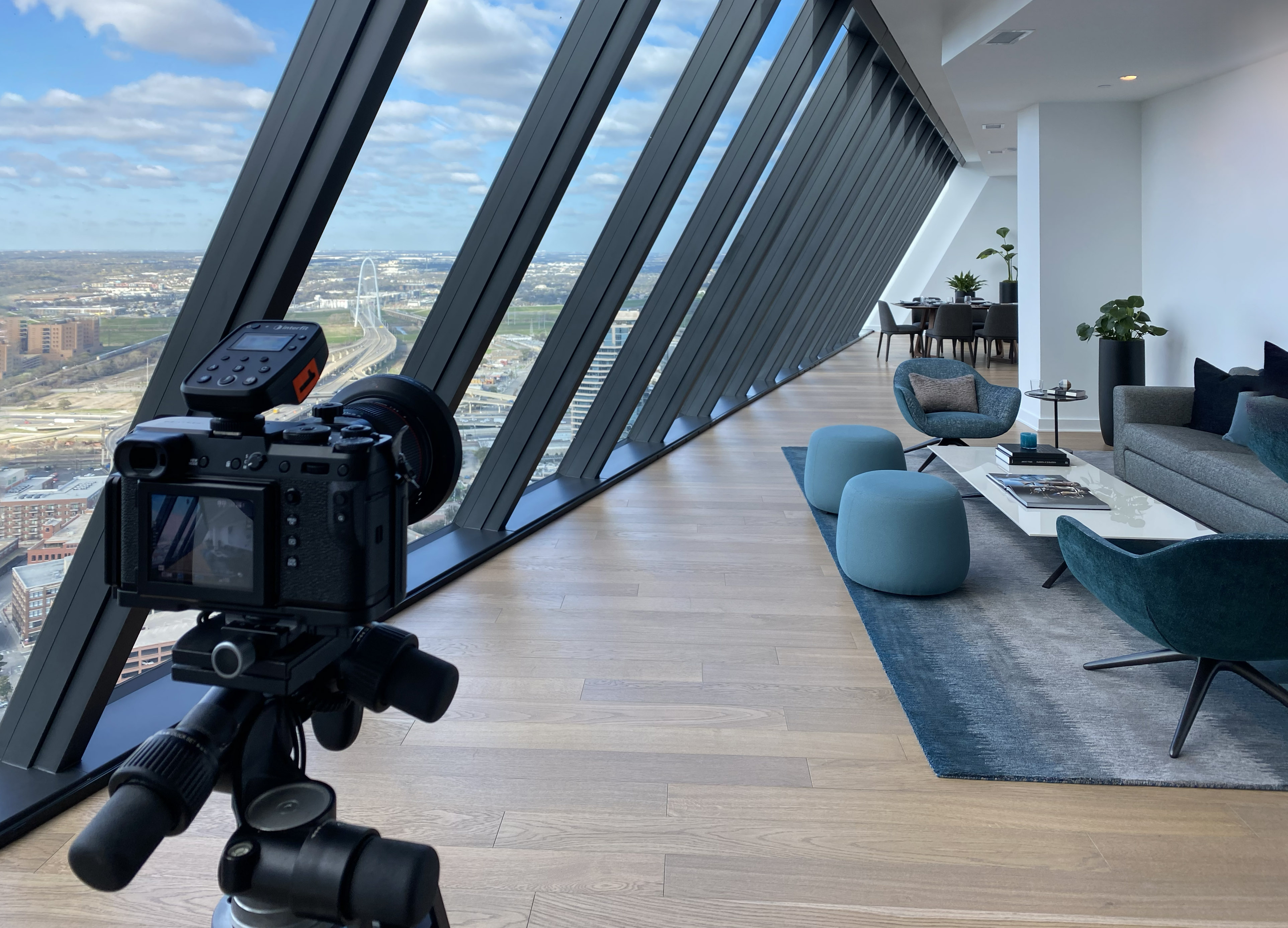
Clients ask about camera gear less often than they used to, right up until someone mentions "medium format" and the conversation stops. It sounds like a marketing term. It isn't. Medium format digital describes a real category of camera, built around a sensor substantially larger than the one in a standard full-frame digital camera, and the difference it makes to a finished image is measurable, not aesthetic opinion.
Here is what medium format actually is, how it differs from the 35mm digital cameras most photographers use day to day, and where that difference actually earns its keep for architecture and interior photography.
What "Medium Format" Actually Means
"35mm" refers to the frame size of 35mm film, which digital "full-frame" sensors were built to match: 36mm by 24mm. Nearly every professional camera most people picture when they think of a DSLR or mirrorless body, and most of the corporate, event, and portrait photography produced today, comes from a full-frame sensor of that size, or a smaller APS-C sensor cropped from it.
Digital medium format sensors are larger again. The common current standard, used in cameras like the Fujifilm GFX series and Hasselblad X system, measures roughly 44mm by 33mm. That is not a small step up. It is close to 70% more surface area than a full-frame sensor. More sensor area means more physical space for light-gathering photosites, and that single fact drives nearly every practical advantage medium format offers.
The Real Differences: Resolution, Dynamic Range, and Color
Resolution. Current medium format bodies routinely ship at 100 megapixels and up, compared to the 24 to 61 megapixel range typical of full-frame cameras. More megapixels on a larger sensor means finer detail is captured without the pixel-level noise that comes from cramming that many photosites onto a smaller chip.
Dynamic range. This is the range of tones, from deepest shadow to brightest highlight, a sensor can record in a single exposure before either clipping to pure black or blowing out to pure white. Medium format sensors typically deliver noticeably more usable dynamic range than full-frame sensors, often an extra stop or more depending on the specific bodies being compared. That headroom shows up directly in the files: shadow detail that holds together instead of turning to mud, and highlight detail that survives instead of clipping.
Color depth. Medium format systems commonly capture at 16-bit color depth, compared to 14-bit on most full-frame cameras. In practical terms, a 16-bit file records billions more possible color and tonal values than a 14-bit file. The eye may not separate every one of those values on a screen, but the extra depth gives an editor far more room to grade, correct, and blend an image before banding or posterization becomes visible.
Rendering. Photographers often describe medium format images as having more "dimensionality," a quality that is hard to quantify but easy to see side by side. Part of it is the extra tonal information described above. Part of it is optical: because a medium format lens covering the same field of view as a full-frame lens needs a longer focal length, depth of field falls off differently, which changes how a scene separates from its background.
Why These Differences Matter in Practice
None of this matters if the final image is a small JPEG on a web page viewed on a phone. It matters a great deal in three specific situations: large-format printing, heavy post-production, and precise material and color representation, which happen to be exactly the situations architectural and interior photography runs into constantly.
Enlargement. A file with more resolution and cleaner detail holds up at larger print sizes. Award submission boards, lobby prints, trade show graphics, and press features that reproduce an image at a large scale all benefit directly from a file built with more information to begin with.
Retouching latitude. Architectural photography is rarely delivered straight out of the camera. Blending multiple exposures for a window that is far brighter than the interior, correcting perspective on a converging building line, removing a stray extension cord or an exit sign, these are standard parts of the process. A file with more dynamic range and more bit depth gives an editor more room to make those corrections without the file breaking down into visible noise, banding, or artifacts.
Material and color accuracy. Architects and interior designers specify finishes with real precision: a specific stone, a specific paint color, a specific wood stain. A sensor with deeper color information renders those choices closer to how they actually look in the room, which matters when the photography is the only record most people outside the project will ever see of the finished material palette.
What This Means for Architecture and Interior Photography Specifically
Interior photography in particular runs into a dynamic range problem more often than almost any other genre. A single frame frequently has to hold detail in a bright window, a shaded ceiling, and a dim corner all at once, sometimes with two or three different light sources of different color temperatures mixed together. That is precisely the scenario where extra stops of dynamic range stop being a spec sheet number and start being the difference between an image that reads naturally and one that needs aggressive exposure blending to look believable.
Exteriors benefit in a related way. A building facade photographed at dusk, holding detail in a bright sky and in a dark shadowed entry at the same time, asks a lot of any sensor. The extra dynamic range in medium format gives more room to work with in exactly the lighting conditions architectural photographers deliberately chase.
And because architectural and interior photography is so often intended for a long shelf life, portfolio use, award submissions, editorial features, printed collateral, the extra resolution and color depth pay off well after the shoot day, whenever those files eventually get enlarged, cropped, or reused in a context nobody planned for at the time of the shoot.
Where 35mm Full-Frame Still Makes Sense
Medium format is not automatically the better tool for every assignment, and treating it that way would be a disservice to clients who don't need it.
Full-frame systems are faster to operate, lighter to carry, and offer a far wider range of lenses for specialty needs like ultra-wide interiors or tilt-shift perspective control. For fast-paced work like corporate events, headshot sessions, and shoots in occupied buildings where speed and flexibility matter more than absolute maximum resolution, full-frame is often the right call, not a compromise.
Cost matters too. Medium format bodies, lenses, and the storage and processing power needed to handle files that size all carry a real premium. For projects where the images will live primarily on the web and social media, a full-frame file already exceeds what those platforms can display, and the extra resolution of medium format goes largely unused.
How We Choose
The decision comes down to what the project actually needs and how the images will be used, not which system sounds more impressive on an invoice. For a hero exterior twilight shot bound for an AIA submission or a print campaign, or a set of interiors with tricky mixed lighting that need to hold together under heavy retouching, medium format earns its place. For a fast-moving corporate event, a headshot day, or a project where the final images live entirely on a website, full-frame does the job more efficiently, and asking a client to pay for capability they won't use isn't good practice.
When a project calls for medium format, we bring it. When it doesn't, full-frame gets the job done just as well, at a lower cost and with less time spent.
Planning a shoot and want to talk through what the project actually needs? Let's talk it through.
About the author
Sean Gallagher has photographed architectural projects for AIA submissions, editorial publications, and development marketing across Texas for over 20 years.
Work with us
We work with architecture firms, interior designers, and developers across Dallas–Fort Worth and Texas. Contact us to discuss your project.
Get in touch →